Startup
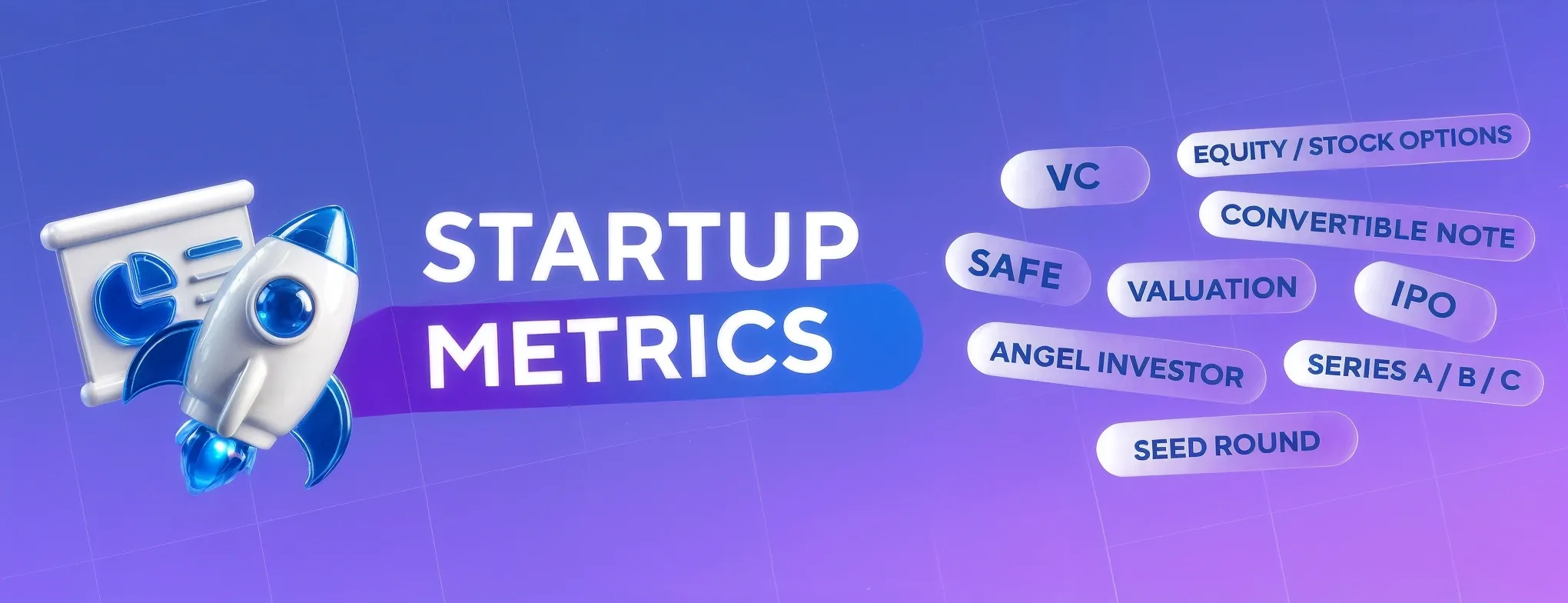
If you are a founder in Baku trying to figure out whether your product is investor-ready, the honest answer usually comes down to startup metrics you have not measured yet, and terms you have heard but never had explained by someone who has actually sat across from a VC. Traction, retention, burn rate, valuation these words get thrown around at every pitch night, but few founders in Azerbaijan get a straight answer on what they mean in practice, or which ones matter before which round. This post walks through the vocabulary of startup fundraising in the order you will actually encounter it, so the next conversation you have with an investor is not the first time you have heard the term.
Before any term sheet, investors want signal. Not a deck, not a story evidence. That means user growth, retention, revenue if you have it, and how those numbers move month over month. Startup metrics are not vanity numbers for a slide; they are the proof that a product creates repeat value rather than one-time curiosity. Mentors who challenge the business model, not just the code, are the fastest way to find out which of your numbers would actually survive investor scrutiny before an investor tells you the same thing in a meeting you cannot repeat.
Angel Investor vs VC: Different Money, Different Expectations
An angel investor is usually a single person writing a smaller check, often earlier, often with more patience and less process. A VC is a fund managing other people's money, moving in rounds, expecting a structured path to a larger outcome. Founders frequently approach both the same way and get the same rejection twice, because the two want different evidence at different stages. Knowing which one you are actually ready for saves months.
Seed Round and the Metrics That Get You There
A seed round is the first real institutional or angel money behind a product that has moved past a working prototype. What gets you there is not the idea. It is a team, a working or near-working product, and ideally early users or revenue. This is exactly the profile the incubation program screens for: founders who are already building, not idea collectors looking for validation.
SAFE and Convertible Note: The Paperwork Before the Valuation Conversation
A SAFE (Simple Agreement for Future Equity) and a convertible note both let an investor put money in now and convert it into equity later, once a priced round sets an actual valuation. The difference matters mostly to lawyers and later investors, but the reason founders use either is the same: it postpones a hard valuation argument until there is more data to argue with.
Valuation: Why It's a Symptom, Not a Goal
Valuation is what an investor is willing to pay for a percentage of your company, given the metrics you can show them. A high valuation with no traction to justify it is a problem you inherit at the next round, not a win. Founders chasing a number instead of the metrics behind it usually end up renegotiating downward later, which is a worse conversation than not raising yet.
Equity and Stock Options: What You're Actually Giving Away
Equity is ownership. Stock options are a promise of future ownership, usually used to bring in talent a cash-poor startup cannot pay in salary alone. Every percentage point given away to an investor, a co-founder, or an option pool is permanent. This is precisely why a free, no-equity path through the early stage matters: a founder's cap table stays untouched by simply getting mentorship, structure, and investor exposure. No equity is taken. That is not a footnote, it is the whole point of doing the early-stage work in a program before a term sheet is even on the table.
Series A, B, C: The Metrics Bar Keeps Rising
Series A round asks for a repeatable business model, not just a promising one. Series B and C ask for scale and expansion evidence.
At each stage, the metrics bar goes up, and the founders who get caught off guard are the ones who never tracked their numbers seriously between rounds. Structured KPI tracking and monthly progress reporting, the kind that holds a cohort accountable during a 12-week program, build the habit of measuring before it becomes existential.
IPO: The Long Game
An IPO is the far end of this path: public markets, public scrutiny, years away for almost every founder reading this. It is worth knowing the term exists in the sequence, not worth planning around this month. If you're interested in more startup content like this, follow our social media channels and website.