Startup
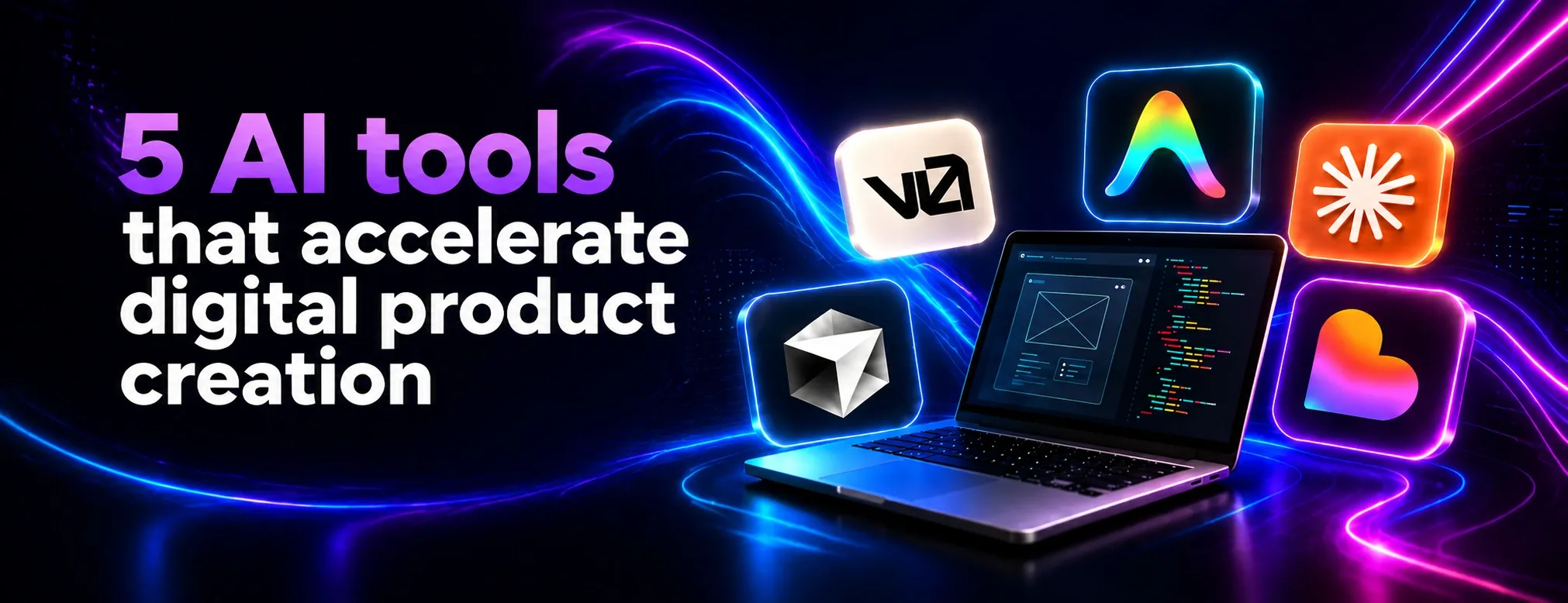
AI-powered development tools are speeding up the process of turning an idea into a design, a working prototype, and even a fully functional web application. v0, Antigravity, Claude, Cursor, and Lovable offer different capabilities suited to various technical skill levels and stages of product development.
A Shorter Path from Idea to Working Product
In the past, even a relatively simple digital product could require a team consisting of a designer, frontend developer, backend developer, and DevOps specialist. Although AI tools do not completely replace these roles, they can significantly reduce the time and resources required to build an initial prototype or MVP. Projects such as landing pages, internal dashboards, simple SaaS products, and startup MVPs can now be built using instructions written in natural language. However, products intended for real users still require professional oversight when it comes to security, testing, data protection, and technical architecture.
Vercel v0
Creating Interfaces and Applications Through Prompts
v0 is an AI development platform that generates web interfaces and real code based on written user descriptions. It can be used to build landing pages, dashboards, blogs, chatbots, and full-stack applications. Users can later modify the generated design and code, add new pages, and deploy the project directly through Vercel. This makes v0 particularly useful for teams that want to prototype quickly, prepare demos for presentations, or validate an early version of a product. The current version of v0 is no longer limited to frontend generation. It can also build full-stack applications with backend integrations.
Google Antigravity
AI Agents That Execute Tasks Independently
Google Antigravity is an agent-based development platform. AI agents within the platform can analyze a project, create a work plan, write code, execute terminal commands, and verify the results in a browser. One of its key advantages is the ability for multiple agents to work on different tasks in parallel. For example, one agent can work on the frontend while another handles the backend or testing process. Antigravity is primarily designed for developers and technical teams that want to automate complex development workflows. Although coding and verification can be carried out within the platform, deployment depends on the selected hosting and cloud infrastructure.
Claude and Claude Code
Writing Code, Analyzing Systems, and Solving Problems
Claude Code is an agent-based coding tool capable of reading an entire codebase, modifying files, executing terminal commands, and completing development tasks. Claude can be used to build new features, develop backend logic, optimize existing code, write tests, and investigate technical issues. Its strengths are particularly noticeable when analyzing large codebases and planning complex tasks step by step. Claude is not a complete hosting platform or a one-click deployment solution. Products can therefore be deployed using services such as Vercel, Cloud Run, AWS, or other infrastructure platforms.
Cursor
An AI-Powered Code Editor for Existing Projects
Cursor is an AI-powered code editor designed for developers. By understanding a project's codebase, it can write new features, modify frontend and backend code, review code, and help identify and fix errors. Cursor is particularly useful for improving and extending existing projects. A developer can describe a task in simple language, and Cursor can identify the relevant files and make the required changes. The platform also includes visual editing capabilities, but Cursor is not primarily a no-code design tool and is mainly intended for users who work directly with code. Deployment is typically managed through the project's Git workflow, CI/CD pipeline, or hosting infrastructure.
Lovable
Building Full-Stack Products with Natural Language
Lovable allows users to build websites and full-stack applications through prompts written in natural language. The platform can work with interfaces, frontend code, backend functionality, and databases. Through Lovable Cloud, users can access capabilities such as databases, user authentication, file storage, server functions, and hosting. Products can be modified through prompts and published directly from the platform. Because of its simple interface, Lovable is one of the more accessible options for startup founders, product managers, and marketing teams with limited technical knowledge.
Which Tool Should You Choose?
For quickly creating a landing page, visual prototype, or MVP, Lovable and v0 are generally more convenient options. For improving an existing codebase, solving technical problems, and gaining greater control over development, Cursor and Claude Code may be more suitable. For technical teams that want to delegate several complex development tasks to AI agents simultaneously, Google Antigravity can be a more appropriate choice. These tools can also be used together. For example, an initial interface can be created in v0, the product can be prototyped in Lovable, and more complex functionality can later be developed using Cursor or Claude Code.
Does AI Replace the Technical Team?
AI is already lowering the barrier to creating digital products. Building the first prototype may no longer always require a large technical team. However, as a product grows, areas such as security, performance, data protection, testing, and system architecture become increasingly important. For this reason, it is more accurate to view AI tools not as a complete replacement for technical teams, but as powerful development partners that accelerate the journey from idea to working product.